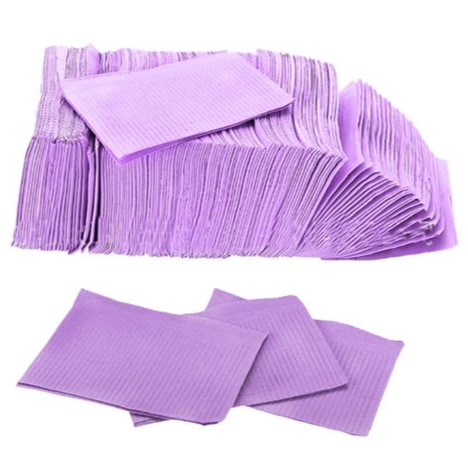
For dental supplies importers and distributors, dental clinic chain procurement managers, and private label buyers, OEM dental consumables packaging is an important part of the purchasing decision. It protects dental consumables during transportation, supports storage and dispensing, and helps establish brand identity.
This becomes especially important when ordering dental bibs and other frequently used clinic consumables. Buyers may choose plain bags for bulk distribution, a dental bib dispenser box for convenient clinical use, or customized master cartons for transportation and warehouse management.
For buyers in the United States, Germany, United Kingdom, France, Netherlands, UAE, and Australia, packaging should be selected according to the product, sales channel, storage requirements, and branding strategy. During the quotation and sampling stage, buyers should compare packaging specifications, quality, MOQ, and delivery conditions rather than focusing only on unit price. For dental supplies private label projects, buyers should also confirm artwork, printing quality, and packaging consistency before mass production, while dental bib carton specifications should be checked for storage and shipping efficiency.
Choose the Right Packaging Format for the Sales Channel
Each packaging format has its own purpose. Buyers should define in advance how the products will be transported, stored, distributed, and used before requesting an OEM quotation.
Bags for Bulk Distribution
Where there is an emphasis on simplicity of the packaging and the efficiency of the bulk distribution process, the bags could be an appropriate choice for packing the dental bibs in fixed quantities of 50 or 100 units per bag.
This packaging could be an ideal choice for distributors and wholesalers who would buy large amounts and deliver the products to the dental clinics out of their warehouse facilities.
The buyers must indicate the material of the bag, its thickness, size, way of sealing, print specifications, and amount per bag.
Dental Bib Dispenser Box for Clinical Use
Dental bib dispensing box design is convenient for users. Rather than always opening the bulk packaging each time dental bibs are needed, the dental bibs can be extracted from the dispensing opening in the package.
Such a design is perfect for dental clinics and dental chains because it enables quick access and gives more room for branding and description of the product.
When ordering OEM boxes, buyers need to ascertain box size, quality of paperboard, design of the opening, mode of printing, surface finish, and number of items per box.
The functionality of the dispenser will need to be checked using actual dental bibs. The box may look beautiful but not convenient if several dental bibs emerge at once or the opening gets spoilt from constant usage.
Master Cartons for Distribution
Dispenser boxes emphasize user convenience whereas master cartons are required to secure a number of internal packages during transit and warehousing.
Hence, a dental bib carton should be assessed based on its construction, carton dimensions, pack quantities, gross weight, net weight, printing, and marking.
Carton dimensions have an impact on international logistics as well, where oversized cartons will lead to higher freight costs and warehouse space requirements.

Define Packaging Specifications Before Quotation
One typical sourcing issue that emerges is where there is no full set of packaging specifications in the buyer’s price inquiry.
This leads to suppliers quoting various package formats, making it hard to make comparisons.
Confirm Product and Inner-Pack Quantity
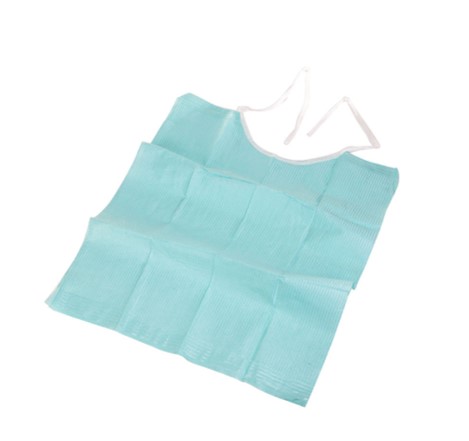
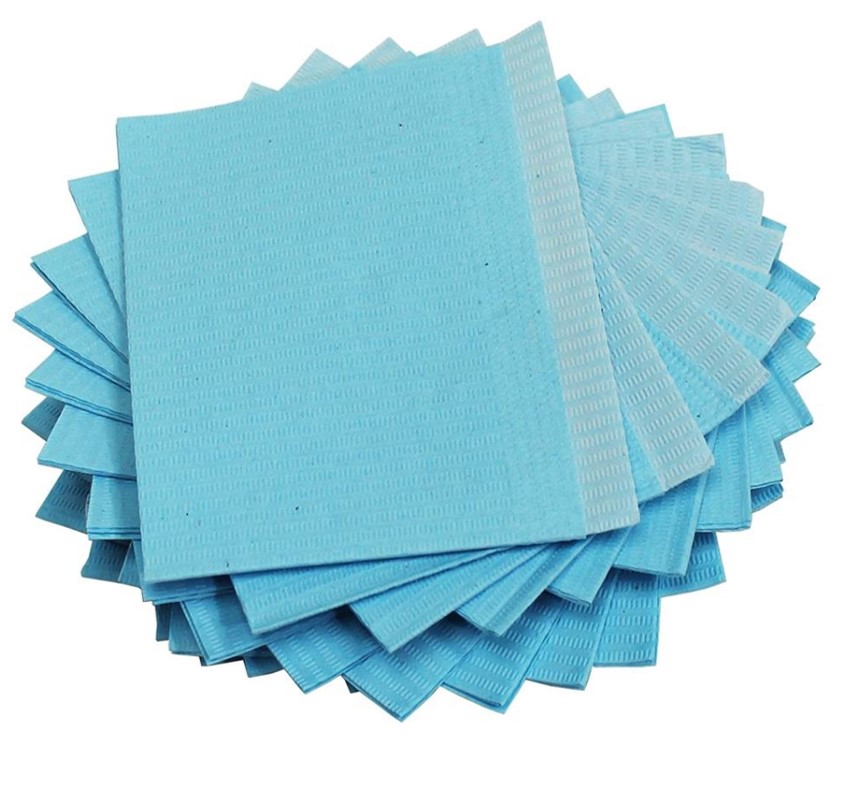
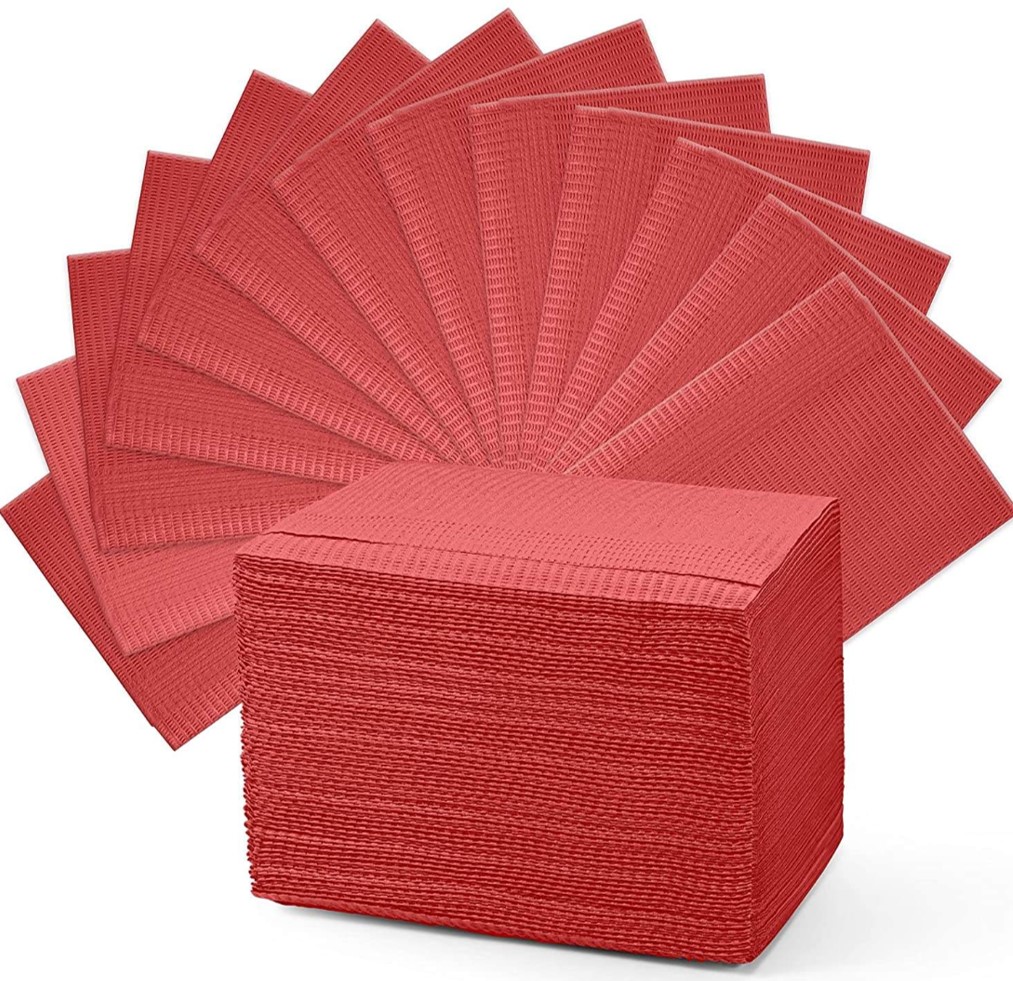
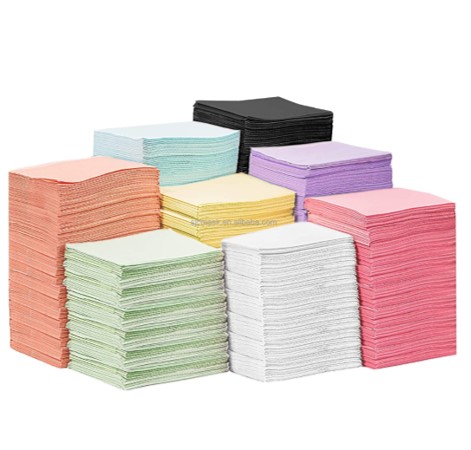
The packaging specification must start from the product itself, which is a dental bib. Consumers will determine the specifications for the size, materials, color, construction, and any printing or embossing.
The third thing to determine would be the quantity of the product per pack. One manufacturer may give a quotation of 100 pieces of dental bibs in a simple bag while the other gives 100 pieces of dental bibs in a custom made dispenser box.
Specify Packaging Materials and Dimensions
Bags: Material, thickness, dimensions, sealing and print specifications.
Dispenser Boxes: Paperboard specification (GSM or Thickness), dimension, opening style, print colors, surface finishing.
Master Cartons: Dimensions of carton, carton construction, packing quantity, print, and internal protection.
Using identical requirements for every supplier creates a more reliable basis for comparison.
Confirm Private Label Artwork
As for the private label projects involving dental supplies, packaging artwork plays a significant role in OEM procurement.
The buyer needs to specify who would be responsible for providing finished artwork or making a dieline. Such critical details as logo positioning, color scheme of the brand, name of the product, barcode, technical characteristics of the item, and others might matter.
Before the start of the bulk manufacturing process, final artwork needs to be reviewed and approved. In case of large private label projects, the buyer needs to ask for a sample of packaging.
What to Check During Quotation and Sampling
The quotation and sampling stage is where packaging requirements should become measurable specifications.
Compare Suppliers Using the Same RFQ
Every supplier should receive the same product and packaging requirements. The quotation should cover:
- Product unit price
- Packaging cost
- Printing charges
- MOQ
- Carton quantity
- Carton dimensions and weight
- Sample cost
- Production lead time
- Payment and delivery terms
Buyers should also ask whether customized packaging requires additional tooling or setup charges.
A lower unit price may not represent a lower total cost if the supplier uses different packaging materials or excludes printing and customization fees.
Inspect the Physical Packaging Sample
Physical samples should be checked together with the actual dental consumable.
For dispenser boxes, test whether bibs can be removed smoothly and individually. For bags, inspect sealing quality, material consistency, printing, and resistance to normal handling.
For master cartons, verify that inner packages fit securely and remain protected without excessive empty space.
The sample should represent the proposed mass-production configuration as closely as possible.
Verify Packaging Quality
Packaging defects can create problems even when the dental bib itself meets the required specification.
Typical issues include incorrect dimensions, weak seals, inaccurate printing, color variation, damaged box edges, incorrect package quantities, and inconsistent carton markings.
For private label projects, buyers should pay particular attention to logos, barcodes, product descriptions, and other printed information. These details should be checked before production rather than after the goods have been manufactured.
Match Packaging With Different Sales Channels
Buyers serving the United States, Germany, United Kingdom, France, Netherlands, UAE, and Australia may use different distribution channels. Packaging should therefore reflect the actual customer and purchasing environment.
Distributor and Wholesale Packaging
Distributors generally need packaging that supports warehouse storage and bulk transportation.
For these buyers, simple bags combined with durable master cartons may be sufficient. The main priorities are consistent package quantities, reliable protection, clear product identification, and efficient carton dimensions.
Dental Clinic and Chain Procurement
Dental clinic chains may place greater emphasis on dispensing convenience and standardized branding.
A dispenser box can make daily use easier by allowing dental staff to access bibs without opening a larger bulk package. Standardized packaging can also simplify storage across multiple clinic locations.
Buyers should consider how the boxes will be stored in treatment rooms, cabinets, or central warehouses before finalizing dimensions.
Private Label Channels
Private label buyers usually require stronger branding and product presentation. Customized bags, dispenser boxes, and master cartons can be designed as one coordinated packaging system.
However, customization should be balanced against MOQ and inventory risk. Large quantities of printed packaging can become difficult to use if the brand design or product specification changes later.
Build a Practical Supplier Comparison and RFQ Checklist
A structured RFQ can help buyers compare suppliers and identify potential risks before placing an order.
The supplier should clearly answer the following questions:
Product specifications: What dental bib materials, dimensions, colors, and customization options are available?
Inner packaging: Can the supplier provide bags, dispenser boxes, or both? What quantities are available per package?
Customization: Can the supplier print logos, brand colors, barcodes, and product information?
Carton configuration: How many inner packages fit into one master carton? What are the carton dimensions and weights?
Sampling: Can the supplier provide a physical sample using the proposed packaging?
Quality control: How are dimensions, printing, sealing, package quantity, and carton markings checked?
Production: What are the MOQ and lead time for customized orders?
Logistics: How will finished cartons be packed, marked, and prepared for international transportation?
This checklist helps buyers compare the complete sourcing solution rather than simply comparing the quoted product price.
Reduce Packaging Risks Before Mass Production
The OEM packaging needs to be considered an integral part of the product specification. This point is especially relevant for dental bibs and other consumables that are ordered in bulk.
Packages can help with bulk shipment and cost-effectiveness, while a dental bib dispenser box can be convenient for dental clinics. A personalized dental bib box can help protect the products during shipping.
For private label projects on dental supplies, customers need to make sure about the packaging materials, sizes, quantities, artwork, carton design, MOQ, and quality before the start of production. Physical samples need to be tested for their appearance and effectiveness.
A clear RFQ will help importers, distributors, dental clinic chains, and private label customers to evaluate the suppliers properly and minimize packaging errors, logistics problems, and production issues.
Conclusion
Dental consumables packaging by OEMs isn’t just a decision between using bags or boxes; it’s about finding a solution that will fit well with the item, sales channels, clinical process, brand, and logistics considerations.
Bags may be the best solution to offer bulk packaging options, dispenser boxes will make your product convenient to use, and master cartons will help you protect your items from damage during shipping and storage. All of these can be used together for private label buyers’ needs to establish the same brand presence.
By establishing packaging requirements prior to quoting and inspecting samples before large-scale manufacturing, dental consumables buyers will have more control over their packaging quality, cost, and delivery. For customized dental bibs and packaging solutions, visit Medical,pet,hotel,beauty nonwoven supplies & scrub suits – GUANG ZHOU SHIJINGCHENG NONWOVEN PRODUCTS CO.,LTD to explore available OEM and private label options.
FAQ
1. What packaging options are available for OEM dental bibs?
Common options include bags, dispenser boxes, and master cartons. Buyers can also combine different formats, such as placing 100 dental bibs in a printed dispenser box and several boxes inside a customized master carton.
2. What should I include in a dental bib packaging RFQ?
Include the dental bib specifications, quantity per package, packaging material, dimensions, printing requirements, artwork, carton quantity, MOQ, sampling requirements, and production lead time.
3. Is a dental bib dispenser box suitable for dental clinics?
Yes. It can make daily dispensing more convenient and provide additional space for private label branding. Buyers should test the actual bibs in the box before mass production.
4. What should private label buyers check before approving packaging?
Check the logo, artwork, brand colors, product information, barcode, dimensions, printing quality, and physical sample. Final artwork should be approved before production.
5. How can I compare dental bib carton suppliers?
Ask every supplier to quote against the same specifications. Compare product price, packaging cost, MOQ, carton quantity, dimensions, weight, printing charges, sample cost, lead time, and quality-control procedures.