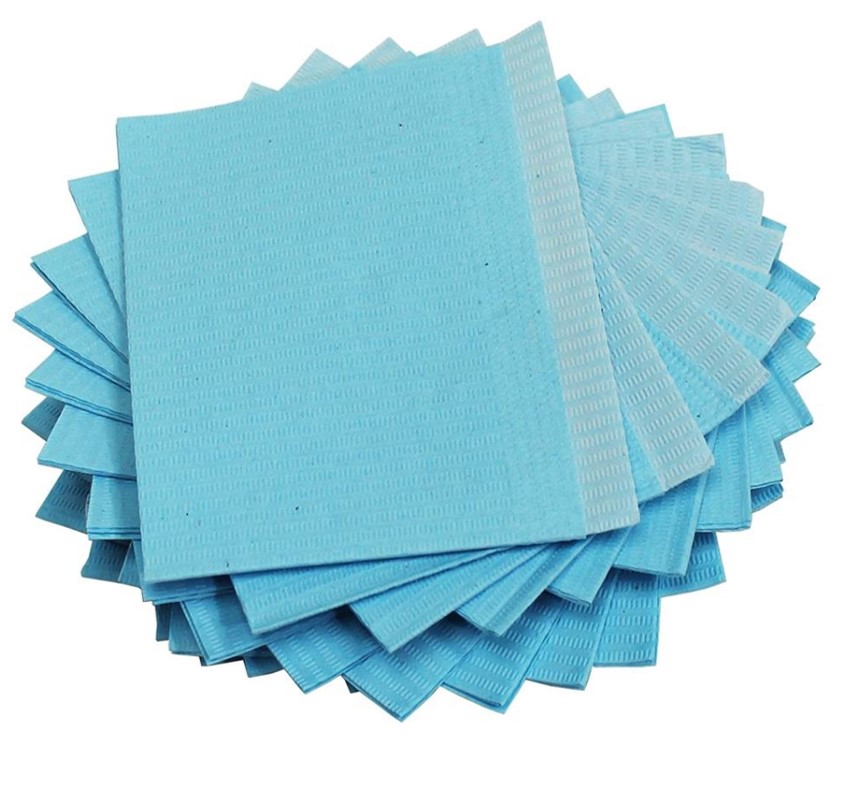
Procuring hygiene products individually for dental supply distributors, dental clinic chains, and Private Label buyers can be more complicated and demanding for inventory management. A dental procedure room requires several disposable hygiene products, including bibs, masks, caps, shoe covers, and bed sheets. Building a standardized dental procedure room hygiene kit can help buyers organize these products around actual clinical needs.
An optimized kit can combine a dental bib bundle, dental clinic PPE, and other essential consumables into one Bill of Materials (BOM), making it easier to calculate the cost per patient, manage inventory, compare suppliers, and organize reorders. For buyers sourcing a dental disposable kit for markets such as the USA, Germany, UK, France, the Netherlands, UAE, and Australia, procurement should consider not only product cost, but also specifications, quality, packaging, customization, and delivery.
This article explains how to design a dental procedure room hygiene kit and what buyers should consider before placing an order.
1. Build the Dental Procedure Room Hygiene Kit Around Actual Use
The first step is to define what each patient and procedure room actually requires. A standard bundle can include one dental bib, one disposable mask, one cap, one pair of shoe covers, and one disposable bed sheet or dental chair sheet.
The exact combination should follow the clinic’s workflow. Buyers should avoid adding unnecessary products simply to make the package appear more comprehensive. A simple, clearly defined BOM is easier to manufacture, inspect, pack, ship, and reorder.
Define the Dental Bib Bundle
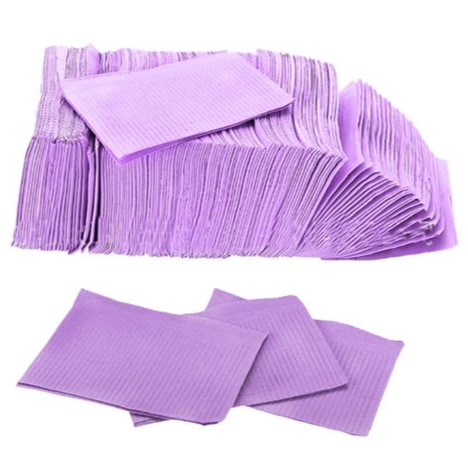
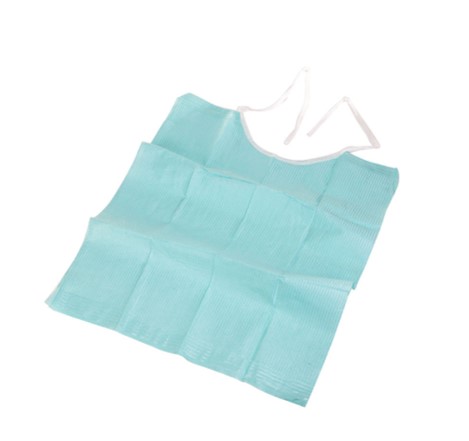
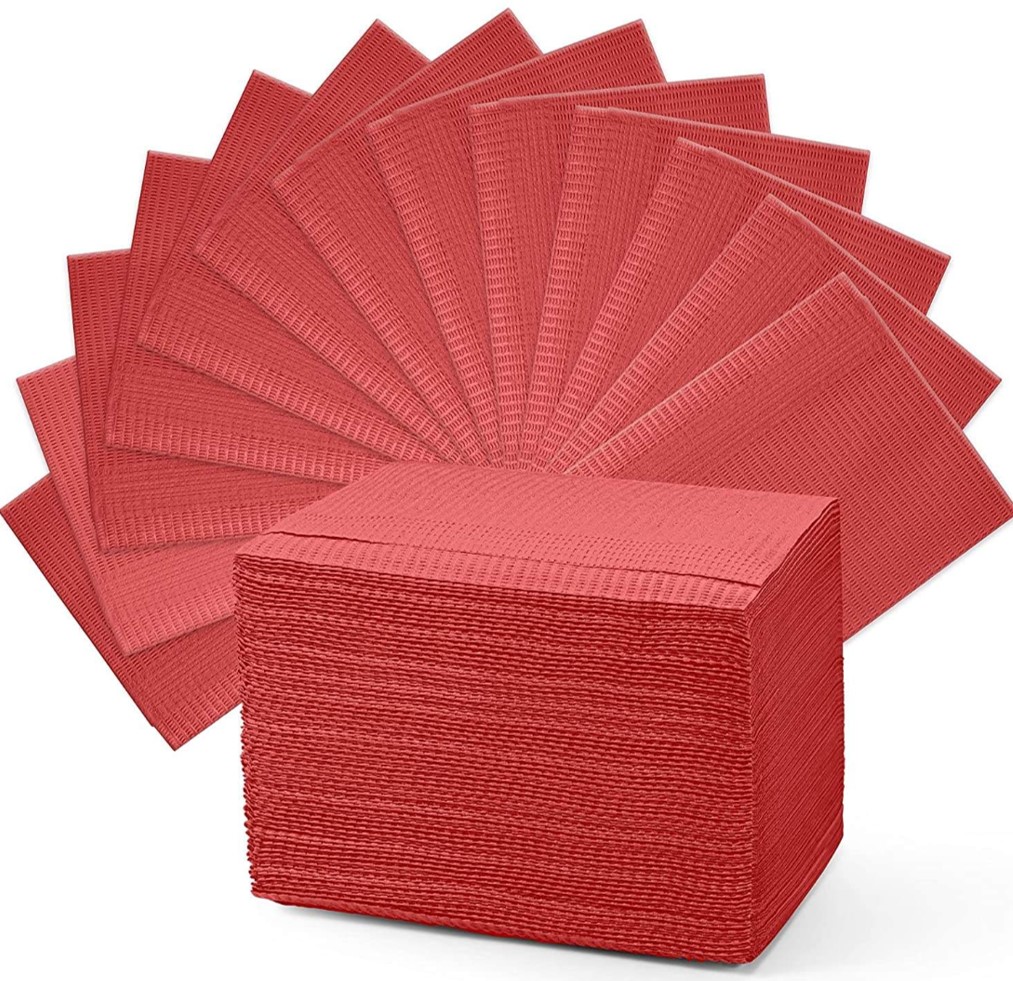
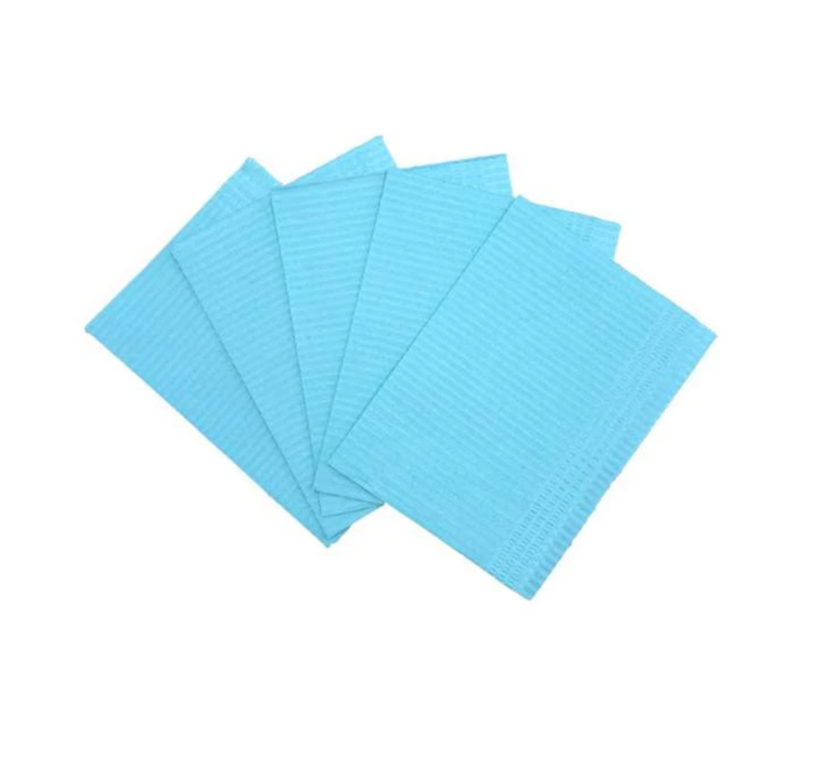
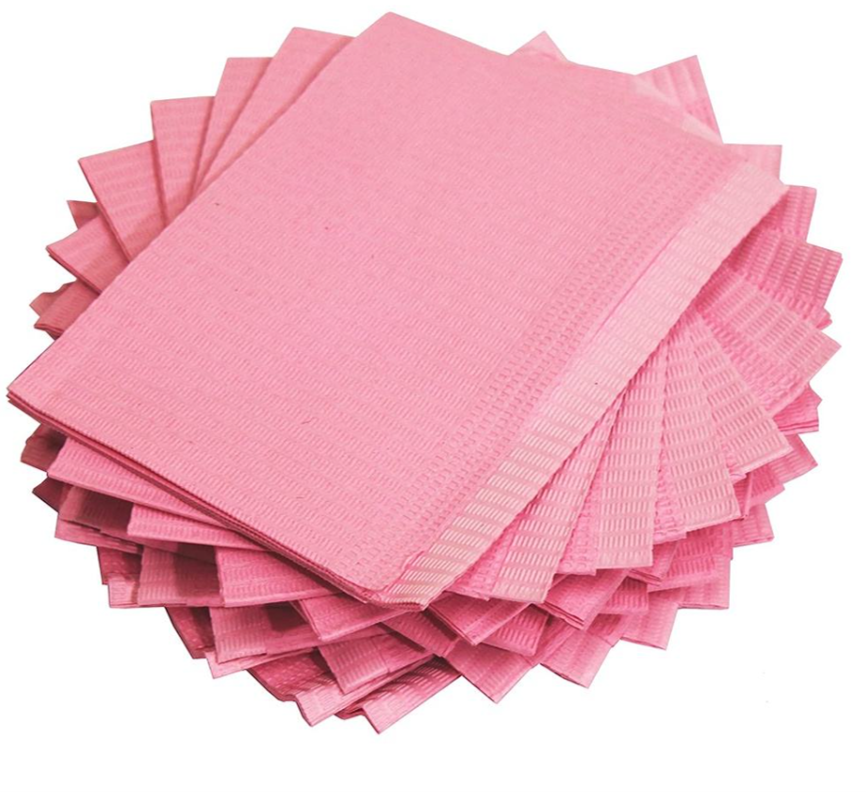
Dental bibs are one of the main items in such a kit. The buyers have to define the size, materials used, absorbency, waterproof coating, color, folding type, and package amount.
One of the popular constructions consists of absorbent paper and waterproof polyethylene backing. Nevertheless, the buyers have to evaluate the whole product and not just pay attention to its thickness or cost.
In case of a dental bib bundle, the buyer has also to define if the bibs should be individually packed, packed in fixed amounts, or assembled in one disposable kit.
Select the Dental Clinic PPE Components
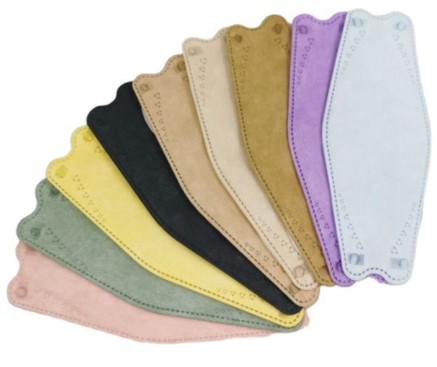
The dental clinic PPE part of the kit may consist of masks, caps, and shoe covers.
As for the mask, the buyer has to define material, number of layers, size, ear-loops structure, nose-piece design, and performance requirements. Caps have to cover the person’s head and have proper elastic performance; shoe covers have to have proper size and sufficient tearing resistance during their normal use.
Standardization of these products in one kit will help the dentists and distributors with procurement and inventory management.
2. Create a BOM and Calculate the Single-Use Cost
Once the kit definition is made, it is important for buyers to create a bill of materials based on actual consumption. This way, it will be easier for them to compare quotes as products could vary.
Calculate the Cost Per Patient
It is possible to have the following calculation formula:
Cost per Patient = Bib + Mask + Cap + Shoe Covers + Bed Sheet + Kit Packaging
In case a single kit is used for one procedure, it will be helpful for buying and pricing.
This approach may be useful for distributors to compare different package configurations and find out whether customized packaging and additional items provide enough commercial benefit.
Calculate the Cost Per Procedure Room
It is also important to calculate consumption per room. It means that there might be some items which need to be changed per patient, whereas others are used according to the clinic’s cleaning and turnover procedure.
Thus, it is necessary to calculate the number of kits used per day/month per room. Such data will be useful to determine annual demand and reorder quantities.
Packaging should also be taken into account. Various amounts per inner packs or cartons may impact on warehouse capacity, shipping volumes and handling expenses.
3. The 5 Procurement Decisions Buyers Should Verify
After getting the BOM ready, buyers could apply to five important decision-making factors while choosing the supplier.
Decision 1: Confirm Product Specifications
Each product needs to have certain specifications.
Dental bibs – dimensions, materials, absorbency, waterproof backing, color and, in case, GSM or weight.
Masks – material, layers, dimensions, ear loops, nose piece and requirements.
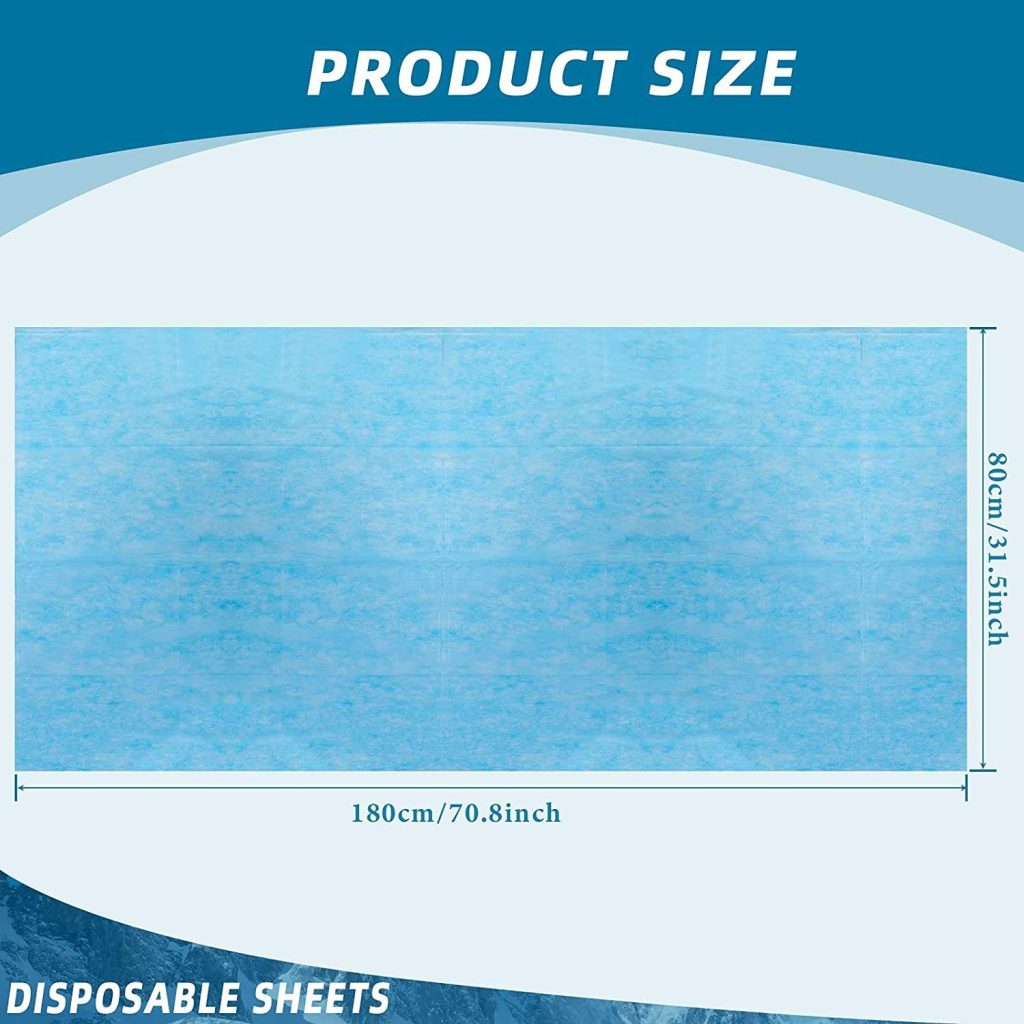
Caps, shoe covers and bed sheets – material, dimensions, GSM or thickness, elastic constructions in case and packaging.
Product specification will eliminate possible mistakes and provide buyers with a unified basis in terms of production.
Decision 2: Verify Quality Consistency
Sample approval should be followed by quality control in production process.
Buyers should make sure about proper dimensions and absorbency of bibs, ear loop attachment in masks, elasticity of caps and shoe covers and strength and handling quality of bed sheets.
When dealing with Private Label buyers, batch uniformity becomes an extremely important issue. Small changes in the product may become much larger problem in terms of production of thousand sets.
The sample, therefore, should become the reference point for mass production and future repeat orders.
Decision 3: Review Packaging and Private Label Requirements
Package details need to be included right from the start in the RFQ.
Specify inner packaging, number of kits per package, number of packages per carton, labels, barcodes, markings on carton, logo printing, and artwork details.
Buyers for private label items should also determine whether the supplier can customize bags, boxes, stickers, labels, and complete kit packaging. The artwork needs to be approved before mass production to ensure that there is no wrong branding.
Decision 4: Compare Manufacturing Capability
Do not only compare suppliers based on unit price.
Buyers need to consider manufacturing capability, raw material sourcing, quality control, customization capability, sample approval, experience in exports, minimum order quantity, and delivery times.
For distributors and dental chains, manufacturing capability is an important consideration because the supplier should be able to provide repeat orders and not just a single order.
Buyers should also clarify whether all the items are manufactured directly or are coordinated through different factories.
Decision 5: Confirm Delivery and Reorder Conditions
Verify sample delivery lead time, production lead time, MOQ, shipping terms, monthly capacity, and reorder lead time prior to placing an order.
In case of multi-clinic dental groups, the supplier should know the expected consumption per month or quarter. This will help to establish the appropriate safety stock without extra inventory.
4. How to Compare Dental Disposable Kit Suppliers
To make an accurate comparison, the buyer must ensure that each supplier provides a quote with exactly the same specifications and quantity.
Compare the Complete BOM
Ask each supplier to quote the same dental bib, mask, cap, shoe cover, and bed sheet specifications.
Ensure that all suppliers quote in the same unit of measurement. While one supplier may quote per piece, the other may quote per pack or carton. All prices need to be converted to the same unit.
The same logic applies to dental bib bundle pricing. Price per piece should be compared to the number of pieces in the pack.
Compare Customization and MOQ
Private Label buyers would value customization ability equally as much as cost. Find out if suppliers can customize colors, sizes of products, packaging sizes, labeling, company logos, and kit compositions.
MOQ must be consistent with the buyer’s sales volume expectations. While MOQ may help drive down the price, a too high MOQ might put unnecessary pressure on inventory for an emerging product line.
Compare Quality and Delivery
Asks for sample products from selected suppliers and compare their quality according to the same specifications.
Evaluate also production delivery times, quality inspections, packaging standards, shipping conditions, and repeat order capabilities. These may impact the total cost of procurement greatly.
5. Prepare a Clear RFQ Before Contacting Suppliers
Detailed RFQ will help suppliers to submit more comparative quotes.
For the complete hygiene kit, include quantity of each item per kit and expected purchase volume.
For dental bibs, include size, fabric, absorbency, water repellence, colors, GSM, folding, and packaging.
For dental clinic PPE, include mask layers and construction, cap and shoe covers material, size, elasticity, colors, and packaging.
For bed sheets, include size, fabric, GSM or thickness, colors, folding, and expected liquid resistance properties.
Moreover, include MOQ, sample requirement, private label packaging, logo/artwork, quality standard, lead time for production, shipping terms, destination market, and reorder frequency.
In case the buyer is from the US, Germany, UK, France, the Netherlands, UAE, and Australia, it will be necessary to verify all local labeling and documentation needs prior to the start of production.
FAQ
What should be included in a dental procedure room hygiene kit?
It may include a dental bib, disposable mask, cap, shoe covers, and disposable bed sheet or dental chair sheet. The ultimate BOM should reflect the actual procedure performed at a specific clinic.
How do I calculate the cost of a dental disposable kit?
Just add the cost of each product used per one customer, including kit packaging. In case of international orders, the buyer should take into account the freight cost, inspection fee, possible custom duties, and waste.
What should I check when buying dental bibs?
The size, material, absorbency, waterproof backing, GSM/weight, color, folding, packaging, and consistency in a batch. Private Label buyers should also make sure that their packaging will be personalized.
Can suppliers customize a complete dental disposable kit?
Yes, some suppliers can combine multiple disposable products into one customized kit. Buyers should confirm product customization, logo printing, packaging, kit assembly, MOQ, and repeat-production capability.
What should be included in a dental disposable kit RFQ?
The RFQ should include the complete BOM, product specifications, quantities, packaging, Private Label requirements, MOQ, quality requirements, sample requirements, lead time, shipping terms, and expected reorder volume.
Conclusion
A standardized dental procedure room hygiene kit can simplify purchasing for dental supply importers, distributors, clinic chains, and Private Label buyers while providing better control over per-patient and per-room costs. The key is to evaluate the complete BOM, product specifications, quality consistency, packaging, customization, supplier capacity, MOQ, and delivery conditions together rather than choosing a supplier based only on unit price.
For customized dental bib bundles, dental clinic PPE, and complete dental disposable kits, visit Medical,pet,hotel,beauty nonwoven supplies & scrub suits – GUANG ZHOU SHIJINGCHENG NONWOVEN PRODUCTS CO.,LTD to explore available solutions and discuss your Private Label requirements.