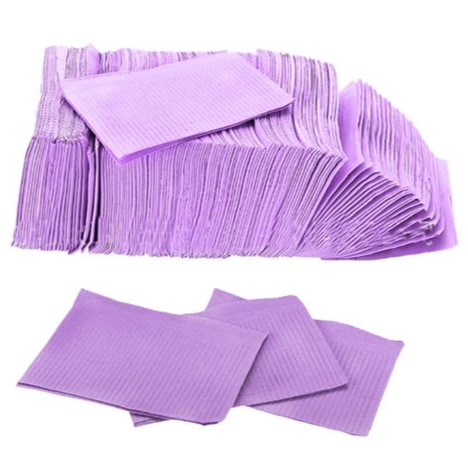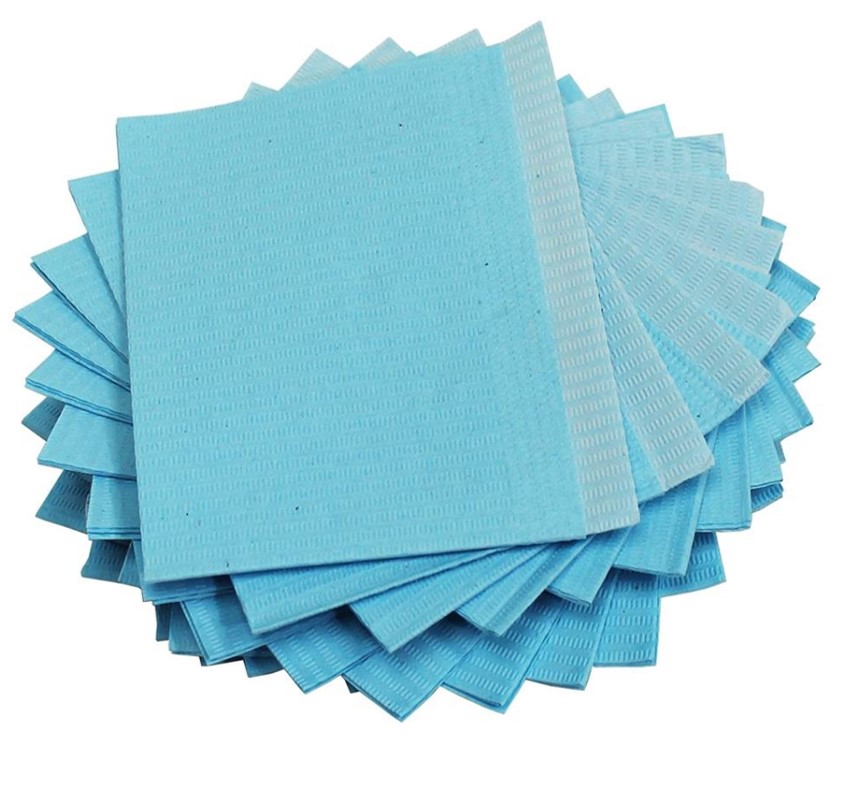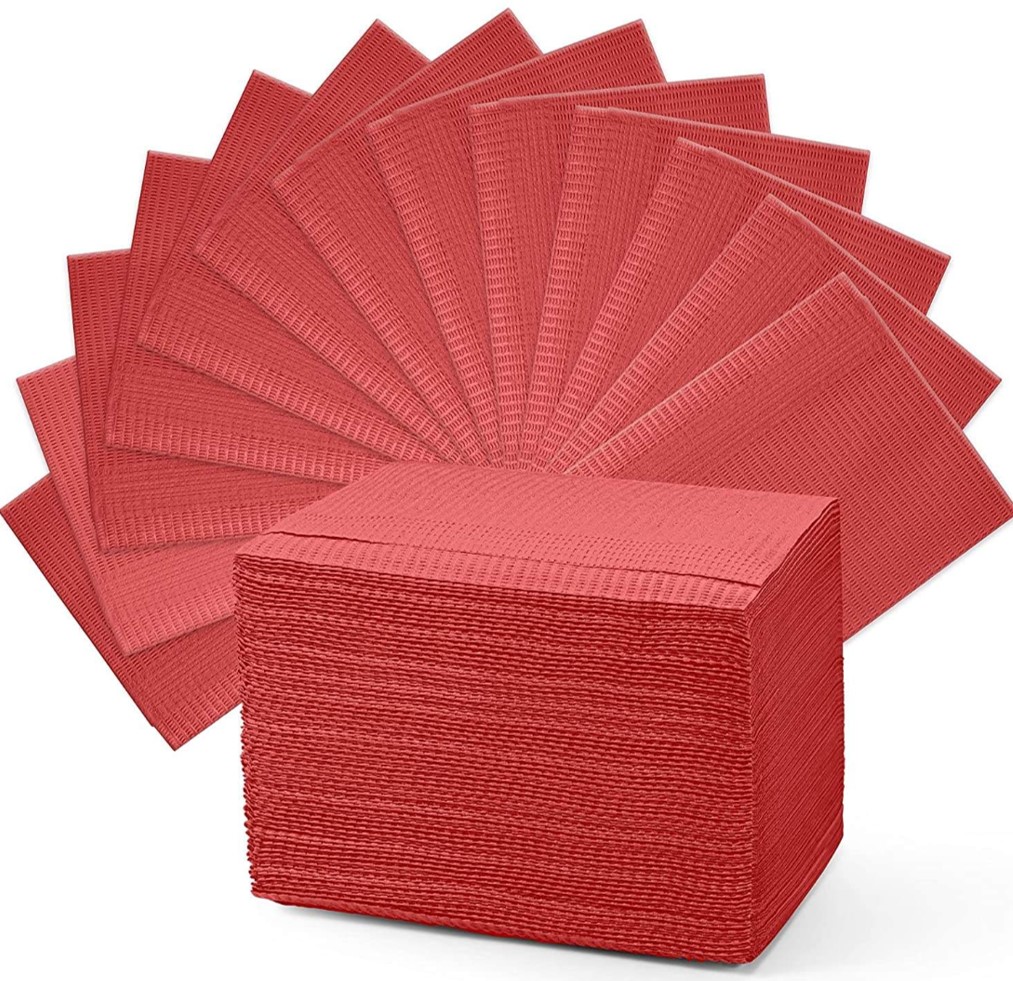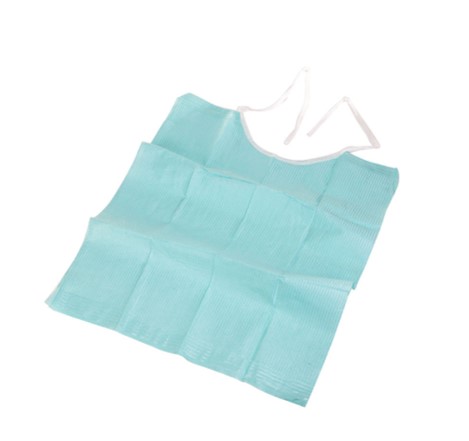
For those who want to buy dental bibs, a good dental bib quality test is crucial to evaluating suppliers. A dental bib might seem fine visually, but there could be issues once it is subjected to saliva, moisture, movement, or exposure to liquids.
If you want to import dental bibs to the United States, Germany, the UK, France, the Netherlands, UAE, and Australia, your quality check must go beyond just checking the visual aspect. Other criteria can include absorbency, leakage protection, wet strength, dental bib tear strength, embossing, packaging, and delivery uniformity.
A buyer inspection process therefore needs to incorporate a dental bib leak test, a dental bib tear strength test, and other dental bib QC checks before mass production and delivery. These checks can help buyers identify potential quality problems early and establish consistent requirements for supplier evaluation.
1. Establish the Dental Bib Specification First
Before checking samples, the buyer should set up a dental bib specification. Otherwise, the quality check could be too subjective because of differences in paper weight, colors, structure, and embossing patterns.
Material and Construction
Typically, a dental bib is a multi-layer design that aims to achieve absorption and moisture prevention. The absorbent layer should take in liquid quickly while the moisture barrier layer prevents the liquid from touching the patient’s clothing.
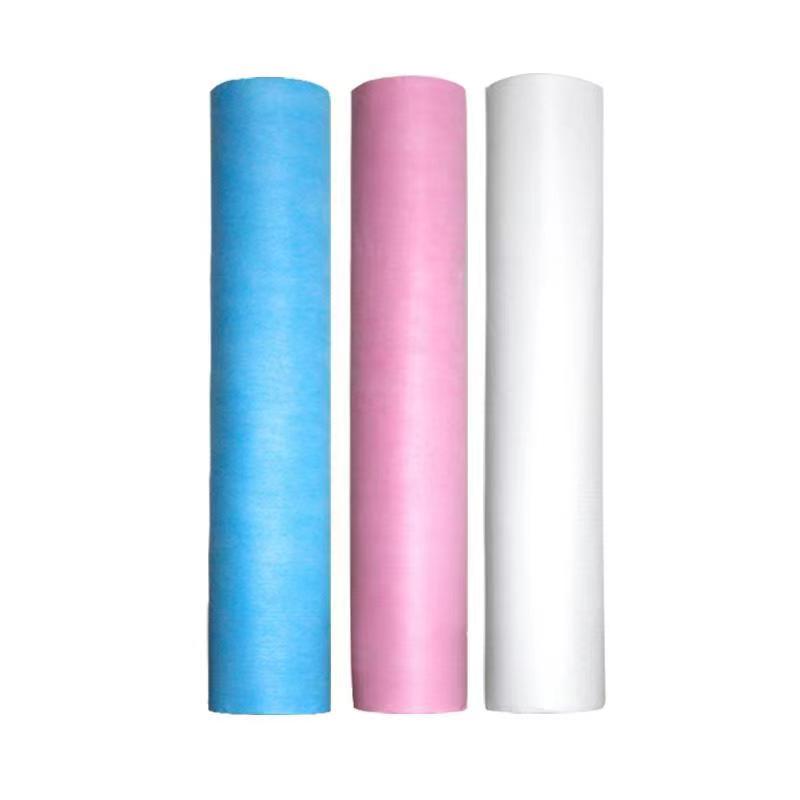
The RFQ should indicate the material composition, number of layers, material type, basis weight, dimensions, and color. The buyer should also state whether standard or enhanced absorbency and moisture protection are required.
Size, Weight, and Appearance
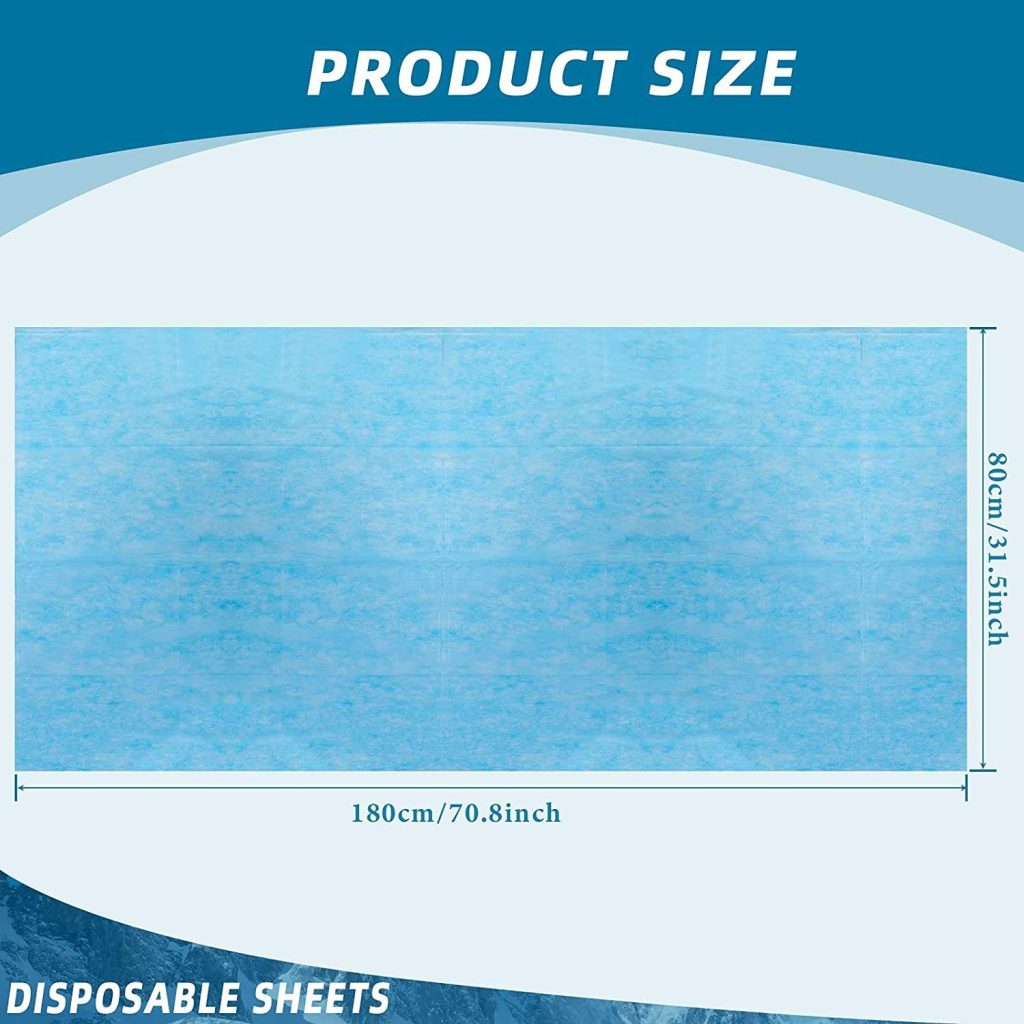
The QC specifications should outline dimensional and weight tolerances. The inspector can measure length and width on a sample of dental bibs from a package and compare them to an approved sample.
Appearance inspection should cover:
- Dimensional and material weight
- Color uniformity
- Edge cutting
- Clean surface
- Wrinkles and creases
- Printing quality
- Odor
- Layer bonding
- Embossing uniformity
These checks are the foundation of a repeatable dental bib quality test.

2. Dental Bib Leak Test: Check Moisture Protection
The dental bib leak test is one of the most critical performance checks, as it needs to ensure protection from moisture reaching the patient’s clothing during the procedure.
To test it, apply a controlled amount of liquid to the absorbent surface and place the bib over a dry reference material. The underside should be examined after a defined contact period for any visible wetting.
Test Different Areas
Leakage does not necessarily occur in the central part. Edges, folds, perforations, and embossed areas may behave differently.
A practical test can therefore include:
- Center-area leakage
- Edge leakage
- Leakage around embossed areas
- Leakage after folding
- Leakage after moderate handling
Instead of simply stating that a bib is “leakproof,” the buyer and supplier should agree on a test method, liquid volume, contact time, and acceptance criteria.
3. Absorbency Should Be Tested Together with Leakage
Leak resistance alone does not indicate overall performance. A bib may prevent liquid from passing through but still perform poorly if the absorbent layer cannot take in moisture quickly.
Absorption Speed
A controlled amount of water or agreed test liquid can be placed on the upper surface. Inspectors should observe whether the liquid is absorbed quickly or remains on the surface.
Fast absorption helps reduce liquid movement toward the patient’s clothing.
Absorption Capacity
Buyers can also compare how much liquid different samples retain. The same test method should be used when comparing suppliers.
A heavier material should not automatically be considered better. Absorbency, leak resistance, strength, and cost should be evaluated together.
4. Dental Bib Tear Strength and Wet Strength
Dental bib tear strength is another important QC factor. During use, the bib may be positioned, adjusted, fastened, and removed several times. Material that performs well when dry may become weaker after absorbing moisture.
Dry Tear Resistance
The dry material should be checked for resistance to tearing under controlled conditions. Samples should be taken from different parts of the production batch to identify potential material variation.
Inspectors should pay particular attention to:
- Edges
- Perforated sections
- Embossed areas
- Folded areas
- Attachment points
The objective is not necessarily to achieve the highest possible tear value but to ensure consistent performance against the agreed specification.
Wet Strength
Wet strength deserves separate attention, as moisture can weaken paper-based materials.
A sample can be exposed to a controlled amount of liquid for a defined period before being subjected to a pulling or tearing test. The result can then be compared with the dry sample.
If the bib becomes excessively weak when wet, it may tear during clinical handling. Dental bib tear strength should therefore be evaluated in both dry and wet conditions.
5. Check Embossing and Layer Integrity
Embossing can improve appearance, structure, and handling, but inconsistent embossing may indicate problems during production.
A complete dental bib quality test should compare the finished product with the approved sample.
Inspectors should check whether the embossing is:
- Complete
- Evenly distributed
- Correctly positioned
- Free from excessive flattening
- Consistent throughout the batch
Layer bonding should also be checked. If the product contains multiple layers, they should remain properly connected during normal bending and handling.
6. Include Packaging in Dental Bib QC
A dental bib can pass performance testing and still create problems if its packaging is unsuitable for international transportation.
That is why packaging must also be included as part of the overall dental bib QC process.
Individual and Inner Packaging
Check:
- Quantity per package
- Package dimensions
- Product labels
- Batch or lot identification
- Barcode accuracy
- Private label artwork
- Sealing quality
- Packaging material
Private label buyers should compare production packaging with the approved artwork before shipment.
Carton Inspection
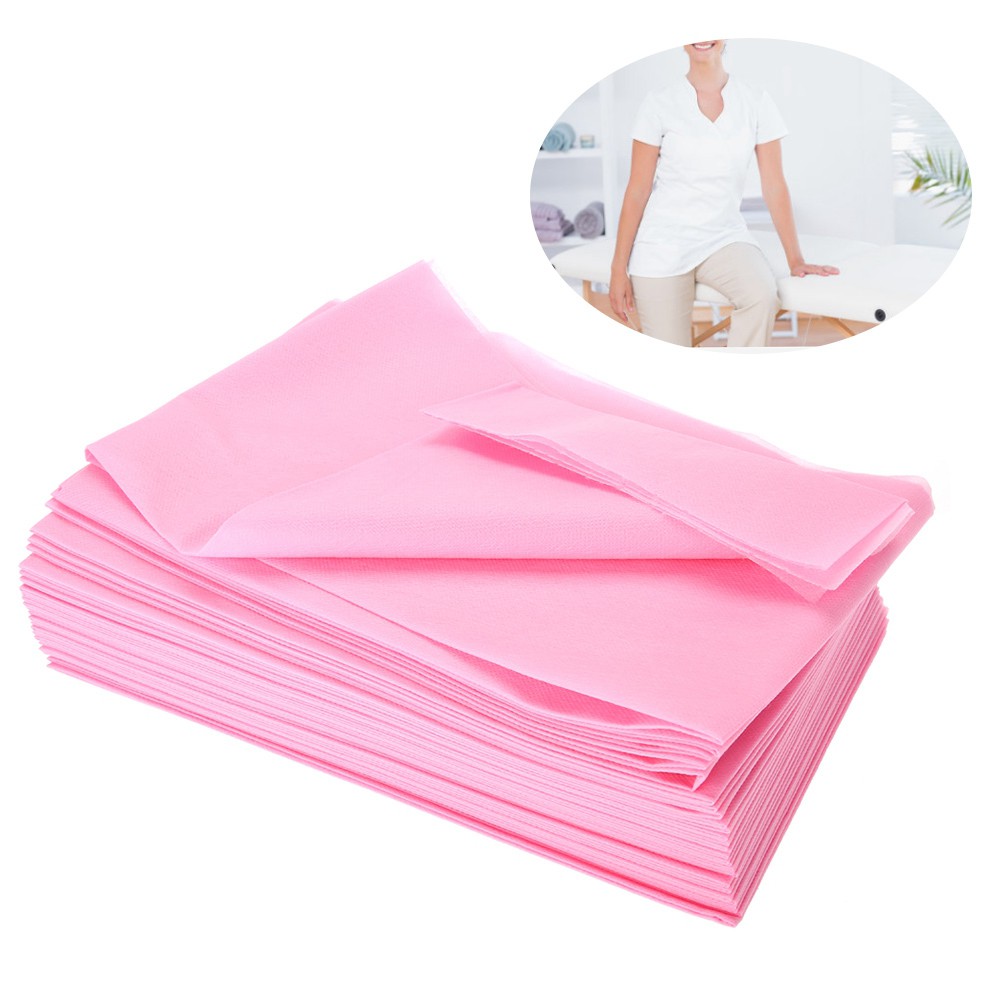
Export cartons should be checked for strength, dimensions, markings, and correct quantities. Buyers should also confirm that different sizes or colors are correctly separated and identified.
7. Five Purchasing Decisions Buyers Should Verify
A structured purchasing process can reduce the risk of choosing suppliers based only on unit price.
1. Specification
Confirm dimensions, material structure, basis weight, absorbency, leak resistance, tear strength, embossing, color, and packaging.
2. Quality
Request production samples and define acceptance criteria for appearance, leakage, absorption, and strength.
3. Supplier Capability
Compare production capacity, QC procedures, private label experience, lead time, sample consistency, and repeat-order performance.
4. Packaging
Verify inner packaging, carton configuration, labels, barcodes, private label printing, and shipping marks.
5. Delivery
Confirm MOQ, production lead time, inspection timing, shipment quantity, and the supplier’s procedure for handling defective goods.
These five areas should be confirmed before the purchase order is finalized.
8. How to Compare Dental Bib Suppliers
Supplier comparison should go beyond the quoted unit price. Buyers should use a standardized RFQ and request the same information from every supplier.
The RFQ should cover:
- Product dimensions
- Material structure
- Basis weight
- Absorbency specification
- Leak test method
- Dry and wet tear test information
- Embossing specification
- Available sizes and colors
- Packaging configuration
- MOQ
- Sample lead time
- Production lead time
- Private label options
- QC process
- Inspection support
- Shipping terms
For example, one supplier may offer a lower unit price but use lighter material, while another may have a higher price but provide stronger wet performance and more robust packaging. Buyers should therefore consider overall product performance and procurement risk rather than price alone.

9. Dental Bib Buyer QC Checklist
Before approving mass production, buyers can use this checklist:
- Product
- Dimensions confirmed
- Material structure approved
- Basis weight confirmed
- Color approved
- Embossing pattern approved
- Performance
- Absorbency checked
- Dental bib leak test completed
- Dry tear strength checked
- Wet strength evaluated
- Layer bonding inspected
- Appearance
- No major stains
- No abnormal odor
- Edges properly cut
- Embossing consistent
- Color variation within specification
- Packaging and Delivery
- Quantity per package confirmed
- Private label artwork approved
- Barcode verified
- Carton markings confirmed
- MOQ and lead time confirmed
- Final inspection arranged
FAQ
What should a dental bib leak test measure?
It should determine whether liquid penetrates through the backing layer under controlled conditions. Liquid volume, contact time, test location, and acceptance criteria should be defined in advance.
Why is wet tear strength important?
Moisture can weaken some paper-based materials. Wet testing helps buyers understand whether the bib can maintain its integrity during actual handling.
Is absorbency more important than leak resistance?
They address different performance requirements. Absorbency manages liquid on the surface, while leak resistance helps prevent liquid from reaching the patient’s clothing. Both should be evaluated.
What should private label buyers check before production?
They should approve the product specification, physical sample, artwork, packaging, QC criteria, and inspection procedure before mass production.
How can buyers reduce dental bib procurement risks?
Use a standardized RFQ, compare suppliers against the same specifications, approve samples before production, conduct dental bib QC during production, and complete final inspection before shipment.
Conclusion
A reliable dental bib quality test should evaluate more than appearance. Leak resistance, absorbency, dental bib tear strength, wet strength, embossing, layer integrity, packaging, and delivery consistency all deserve attention when sourcing dental bibs internationally.
For dental supplies importers, distributors, dental clinic groups, and private label buyers, a clear QC checklist makes supplier comparison easier and helps prevent quality problems from reaching customers. A consistent inspection process also gives suppliers clear acceptance criteria for repeat orders.
Contact Medical,pet,hotel,beauty nonwoven supplies & scrub suits – GUANG ZHOU SHIJINGCHENG NONWOVEN PRODUCTS CO.,LTD to discuss product specifications, samples, QC requirements, and private label packaging for your target market.