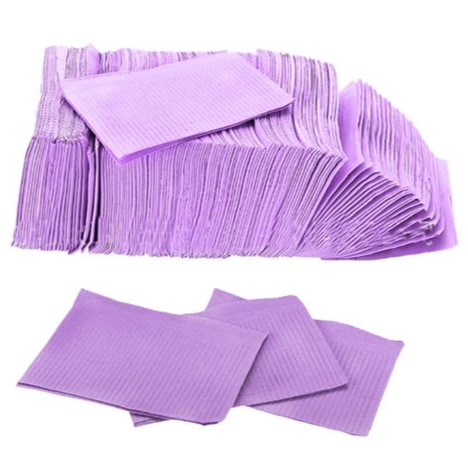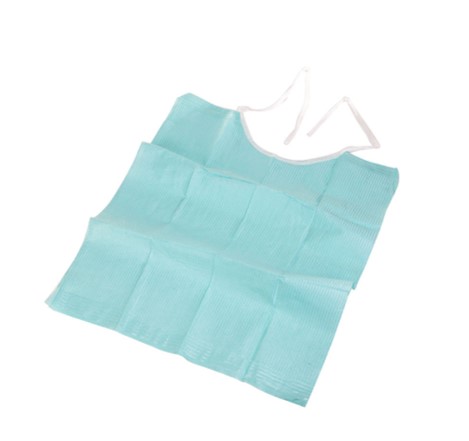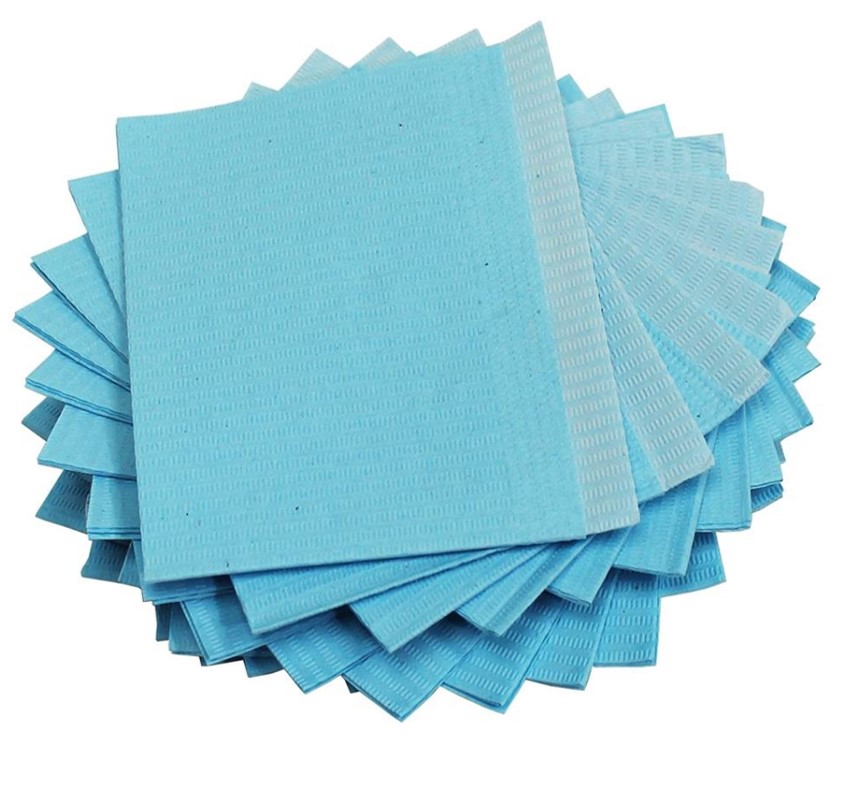
Dental bibs are one of those tiny things that get used in any dental office very often. For distributors, dental chains, and private label buyers, estimating the real demand is essential when setting inventory levels, placing orders and avoiding excess stock. A practical dental bib demand forecast can help buyers understand dental clinic bib usage, plan dental supplies reorder cycles, and maintain suitable dental distributor inventory levels.
A rather realistic forecast for dental bibs demand can be started with just 3 fundamental elements: amount of dental chairs, daily patients and amount of bibs used per each patient. After that, a buyer should add the acceptable level of losses from damaged, contaminated or just unusable items.
For instance, an office with 10 chairs and an average of 60 daily patients may need about 60 dental bibs per day assuming one bib for each patient. Considering 10% of losses, the calculated amount of requirements will be around 66 pieces of bib per day, which equals to 1,716 per a 26-day month.
Such estimation can be useful for any dental distributor for determining appropriate purchasing volumes. It also provides a practical basis for evaluating dental clinic bib usage, planning dental supplies reorder schedules, and controlling dental distributor inventory.
How to Calculate Dental Clinic Bib Usage
Before planning your purchasing process, it’s worth knowing how your clinic generates bib demand. Chair count won’t be a decisive factor because some of your chairs will work not 24/7, while the number of patients per day might differ from clinic to clinic.
Start With Daily Patient Volume
The most primitive way to forecast how much dental bibs you’ll need per day is to calculate how many patients will need them.
The main equation is:
Dental Bib Consumption = Number of Patient Visits Per Day × Bibs Per Patient
If your clinic treats 50 patients per day, with one bib needed for each patient, daily demand will be equal to 50 bibs.
But sometimes some dental procedures might require more bibs due to contamination, replacement, and the longer time spent during the procedure. That’s why clinics need to use real consumption data whenever it’s possible instead of theoretical patient numbers.
Use Chair Count as a Cross-Check
Chair count offers an interesting validation measure for dental clinics’ consumption of bibs.
A clinic with 8 dental chairs can theoretically be expected to serve many patients, but depending on the time of operation, appointment schedule, treatment length and chair utilization, there can be a variation in its use.
The distributor may ask:
Number of chairs × average number of patients per chair per day × number of bibs per patient
This equation will provide a more realistic model for demand as compared to simple multiplication of the number of chairs with a certain inventory quantity.
In case of multi-clinic dental practices, chair count can help distributors determine the demand when consumption data is not yet available.
Add a Loss and Safety Allowance
Consumption is always greater than the theoretical number of patients’ visits.
There may be losses due to damages caused to the product while packaging, incorrect packaging, contamination prior to using and changes in treatment process leading to discarding the product. The clinic may also require additional supply in case of sudden increase in the number of patients.
A realistic demand forecast should include 5%-15% loss margin.
For instance:
60 daily patients x 1 bib x 1.10 = 66 bibs per day
Within 26 working days:
66 x 26 = 1,716 bibs per month
This way, distributors get a more reasonable initial figure to use in dental distributor inventory management.

Building a Dental Bib Demand Forecast for Distributors
After usage estimation in individual clinics is calculated, the distributors have to translate those numbers into purchase and replenishment volumes, taking into account customer volume, ordering frequency, delivery time, and safety stock.
Estimate Demand Across Customer Accounts
The distributor usually provides more than one clinic. That is why demand forecasting should include total consumption of different customer types.
For instance, a distributor services 20 clinics, and each clinic consumes on average 1,500 bibs per month. The estimated demand of the distributor will be about 30,000 bibs per month without safety stock addition.
Nevertheless, customer consumption is not going to be equal. A big dental network will consume thousands of bibs per month, and a small private dental practice will buy only some dozens of cartons from time to time.
Customer segmentation according to consumption will help to create a better forecast.
Consider Lead Time and Reorder Cycles
When developing an inventory management strategy for dental supplies, it would be wise to think about the amount of time needed for manufacturing, inspection, packaging, and delivery of the new order from the vendor.
If, for instance, a supplier needs four weeks to produce a new order and additional weeks to deliver it internationally, a distributor cannot wait until his inventory becomes almost exhausted to make a new order.
A simple strategy to calculate the reorder point might look as follows:
Reorder Point = Average Daily Usage × Lead Time + Safety Stock
For example, if a distributor sells 1,000 bibs a day and has 30 days of replenishment time, his base lead-time demand will be 30,000 bibs. Then, some safety stock may be calculated.
Account for Seasonal and Promotional Demand
The demand for dental supplies can vary depending on the increase of activities in the clinics, new clinic openings, procurement campaigns, and promotions.
For a distributor working in many different regions, he should be prepared that buyers in the US, Germany, UK, France, the Netherlands, UAE, and Australia can have various purchasing cycles and distribution channels.
A history of three to six months of the use of the product could help determine whether there is a true trend or just a temporary deviation.
What Buyers Should Check Before Ordering Dental Bibs
Forecasting dental bib demand will provide information on the volume needed. The following step is to ensure that the chosen bib is able to satisfy practical needs of the clinic where the bibs will be delivered.
While analyzing the dental bib demand and evaluating suppliers in the early stage, buyers need to ensure specification, quality, packaging, and terms of delivery are correct.
Material and Absorbency
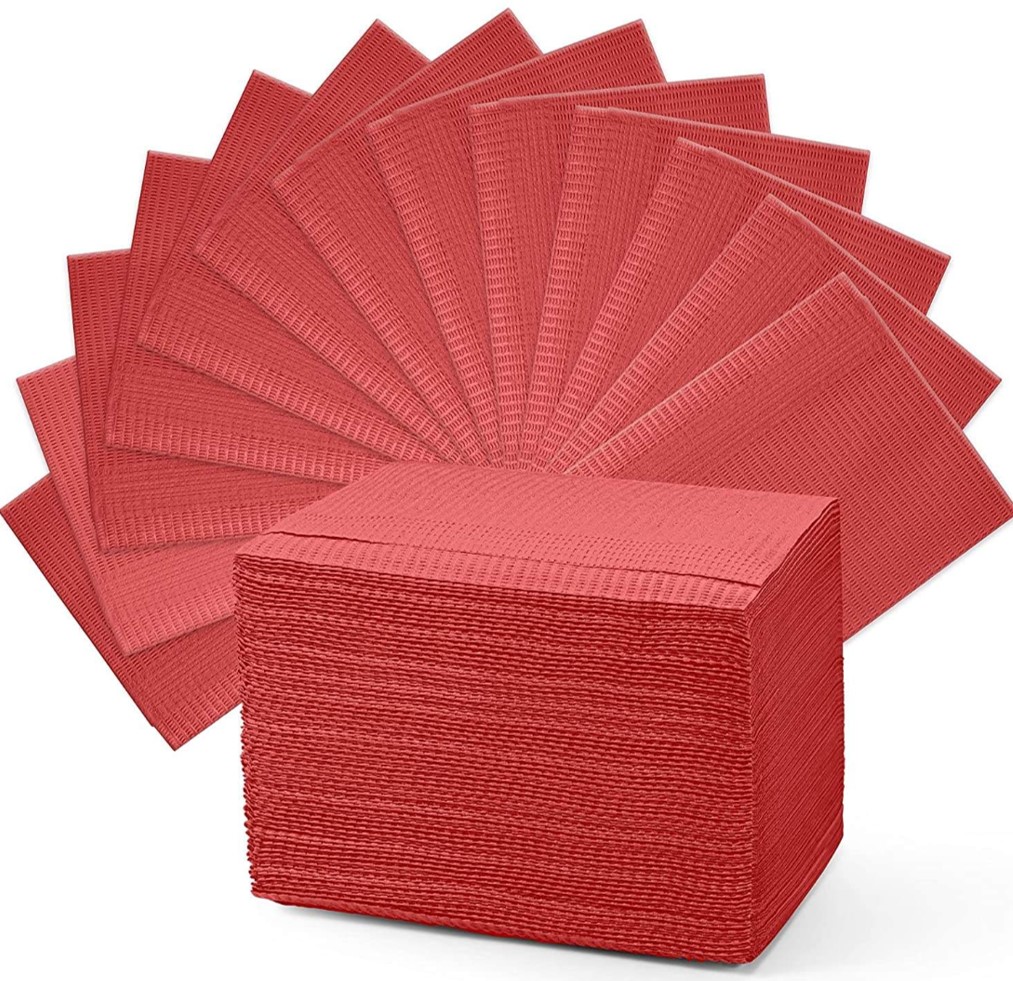
The combination of materials may vary. Paper and polyethylene or some other layer with liquid resistance properties will be used in bibs.
Buyers have to check the number of layers, material composition, grammage and absorbency performance.
Size, Color, and Embossing
Clinics that purchase dental bibs could have different requirements regarding sizes, colors, and surface finishes.
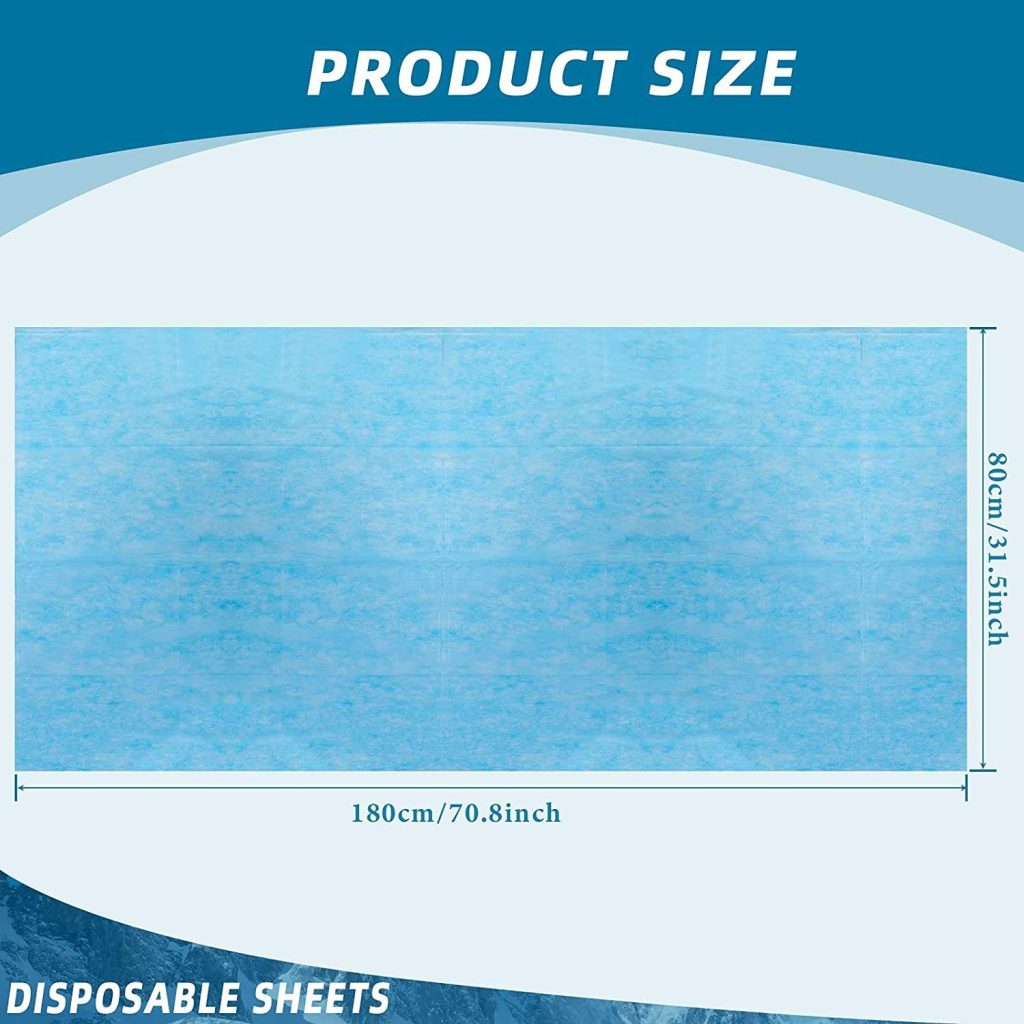
Buyers need to verify before making an order in bulk the actual size when unfurled, effective coverage area, color uniformity, embossing pattern, and possibility of customized colors.
For products that will use private labeling, buyers need to confirm if the supplier has facilities to customize their branding and carton markings.
Packaging and Carton Configuration
Packaging plays an important role in how dental distributor will store and transport the product, hence it impacts their inventory.
It is therefore important for the buyer to find out the quantity per pack, packs per carton, carton size, gross weight, and other labeling details.
When selecting the best price, buyers may overlook the packaging configuration. Therefore, carton size and packaging quantity are very important in the RFQ process.

How to Compare Dental Bib Suppliers
In comparing suppliers, buyers should look at more than the quoted price. The ability to supply consistently and on time can directly affect their customers.
Compare Product Consistency
Inquire from the suppliers about their methods for controlling material quality, dimensions, absorbency, color, packaging, and inspection of the finished product.
Approval of a sample must be based not only on its appearance but also on certain measurable parameters. Having approved the sample, the buyer must establish how production will be consistent with the reference approved.
Compare Production and Delivery Capability
The supplier must clearly describe his/her production capacity, normal delivery time, minimum order size, and peak season capacity.
This becomes especially important for distributors that have repeating needs for ordering dental supplies. Supplier who will be able to make repeat orders will make inventory planning easier than supplier with varying delivery time between orders.
Compare Private Label Support
Private label buyers should verify whether the supplier provides custom packaging, labeling, carton printing, specification, and artwork review.
It also might be useful to establish who is responsible for the packaging approval and how the issue of changing packaging materials and product specifications in future production will be solved.
Dental Bib Supplier RFQ Checklist
In issuing quotation requests, buyers may require suppliers to include the following:
Product specifications: Material structure, layers, size, weight/thickness or GSM, absorbency, color choices, and customizations available.
Packaging: Number of bibs per pack, number of packs per carton, carton size, weight, labeling, and private label packaging.
Commercial terms: Minimum order quantity (MOQ), samples, unit price, packaging cost, payment terms, and price validity.
Production: Production capacity, production lead time, repeat orders’ lead time, and capability to produce the forecasted monthly volume.
Quality control: Inspection of raw materials, production, final product, and bulk production based on samples.
Shipping: Carton details, load quantity, shipping terms, and shipping schedule.
These requirements will allow distributors to evaluate the suppliers under the same conditions and avoid any surprises in the future.
FAQ About Dental Bib Demand Forecast
How many dental bibs does one clinic use per day?
There is no fixed number. But the practical way to find out the number is through daily patient visits multiplied by the number of bibs per patient. For instance, 50 patient visits and one bib per patient will mean 50 bibs, but without any safety margin.
Should distributors keep safety stock of dental bibs?
Yes, it is quite necessary. The amount of safety stock required depends upon the consumption of the customers, lead time, reliability of the supplier and consequences of any stockout.
How often should dental bib inventory be reordered?
It depends upon the sales volume and lead time of the supplier. High volume distributors might check their inventory on a weekly basis and low volume on other basis. Inventory needs to be checked prior to lead-time demand.
What specifications should private label buyers confirm?
They need to verify material, size, layers, absorbency, color, packaging style, branding, carton marking, MOQ and lead time before placing an order.
How can distributors improve dental bib demand forecasting?
The above factors such as historical sales performance, clinic chair count, patient volume, seasonality, reorder rate, supplier lead time and safety stock considerations may be combined by distributors to predict demand.
Conclusion
Demand forecasting of dental bibs starts from clinic consumption and then progresses into distributor’s stock planning. Analysis of clinic chairs, patient volume, bibs consumption per procedure, wastage percentage, supplier lead time and reorder cycle can help buyers forecast demand with higher precision and reduce out-of-stock scenarios as well as overstocking.
If you are buying dental bibs for clinic consumption or distributing them privately, the next step is verification of product specifications, packaging, quality control, MOQ and shipping possibilities before making an order. If you are looking for dental bibs suppliers for clinic demand or private label distribution, feel free to contact Medical,pet,hotel,beauty nonwoven supplies & scrub suits – GUANG ZHOU SHIJINGCHENG NONWOVEN PRODUCTS CO.,LTD to discuss the specifications and ask for samples.